
MEDITATION WITHOUT PRESSURE: For Those Who Think They Don’t Know How to Meditate
When we say meditation today, most people have a clear idea of what it’s supposed to look like.
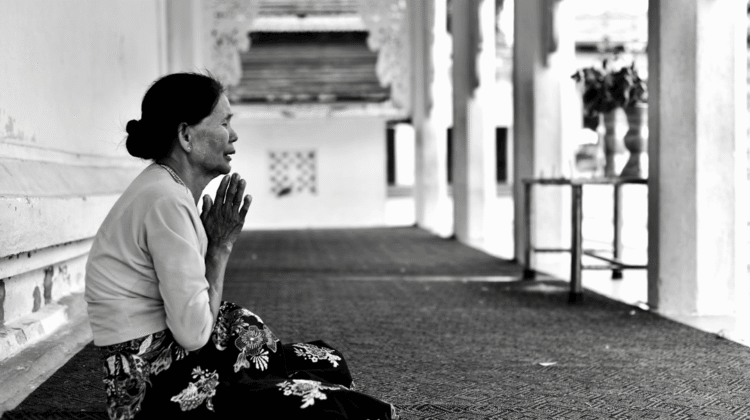
A yogi on top of a mountain or in front of a Buddhist temple, fully devoted, pure Zen, a gentle smile of an enlightened monk who has unlocked the secrets of the universe and attained enlightenment.
The reality is actually something completely different.
And that’s why, with this blog, I want to demystify meditation.
What Does Meditation Look Like in Practice?
First, you sit down and try to calm yourself. Of course, expectations are high. Your thoughts will suddenly dissolve, and you will reach unimaginable depths of inner peace.
Yeah, right.
Your mind kicks in.
Thoughts swarm in flocks you can’t control.
Suddenly everything itches. Your limbs go stiff.
You want to move, but somehow it feels like that wouldn’t be “right.”
You force yourself, pretend you’re okay, think about how you’re pretending to be okay.
If you’re meditating in a group, you slowly open your eyes and—God forbid—you see the person next to you completely at peace.
How can they do it… and look at me…
This is awful. This isn’t for me.
I’m an active type.
I need something more intense to blow off steam.
No way.
Never again.
Why Is It So Hard?
Well, first of all, because we started with an idea of how it’s supposed to be.
There is no recipe for what your meditation will look like.
So forget the algorithm or the meditation program.
Because we are neither a program nor an algorithm.
In fact, only when we step outside of them does the real dance begin.
Staring Into Space
I remember my grandmother. She never once sat down to “meditate” in her life. But she meditated every day. Working in the garden, sitting in the yard with a cup of coffee in her hand. In those moments, she simply looked at her flowers and was present. Minimal movement. Minimal worry. Just her, the coffee, and the flowers.
That’s the essence of meditation.
We don’t really know how to do that anymore. Because we’ve been conditioned to always be entertained by something. We reach for our phones. To become spectators of something. Some content that’s more interesting, faster, rewarding us with more dopamine than simply sitting and staring into space.
And Why Do We Even Need Meditation?
Because we are increasingly overwhelmed, scattered, anxious, worried, depressed, hyperactive, and result-oriented.
Meditation is a way to reconnect with that inner being within us—the one we so often chase, pressure, and push into constant activity.
Okay, but why is it so important to reconnect with it?
Because it’s important to hear it. And we can only hear it when we are in stillness. That’s when an entirely new space of communication opens up—a space in which we get to know that being, discover it, listen to it.
That inner being — that is our soul.
And the soul is the very core of who we are.
You can get to know the whole world, but if you haven’t gotten to know yourself, it was all in vain.
If you don’t know who is really sitting inside you, what you’re capable of, what you need in a given moment—sit down and meditate.
You’ll sweat. You’ll struggle. You’ll get irritated.
But sit every day.
Start with five minutes.
And watch yourself change. Watch how it becomes more and more important to you.
That inner voice.
Because out there, there are too many voices—and they can be deafening.
Out there, there is so much noise. But within you, there is always space for peace.
Meditation and the Nervous System
Meditation is powerful because it gently shifts the nervous system “into a lower gear.”
It allows it to rest, recover, and regulate emotions more effectively.
When you direct your attention inward, the parasympathetic nervous system (the system of relaxation and regeneration) is activated, while the dominance of the sympathetic system (fight or flight) decreases.
As a result, levels of cortisol and adrenaline drop, and the body enters a state of homeostasis.
Today, this is something we achieve less and less easily—which is precisely why it matters.
A popular Zen proverb says: You should sit in meditation for 20 minutes a day. And if you don’t have time? Then sit for an hour.
What is it really teaching us?
That human beings have always had a natural need for silence in order to cope more easily with the fast pace of life and to strengthen concentration.
It’s not a punishment, even though at first it may feel that way.
It’s a practical solution to the feeling of overload.
The core message is that busy people need meditation even more—to gain perspective and effectiveness, not less.
So Give It a Try
You don’t have to look like a Buddhist monk.
You don’t need special clothes or to sit in lotus position.
You don’t have to fight your thoughts away.
Thoughts will come and go.
Just don’t serve them tea.
And that’s the whole wisdom.
In Conclusion
If you feel the desire to meditate but don’t know how to begin, we can do it together.
Step by step.
Ponte Porton – guided meditations for beginners. Once a month.
Follow us for details.