
Nasya Therapy: A Lifeline for the Sinuses and Respiratory Issues
We All Deserve to Breathe Freely.
Breath is the beginning of everything. With our first inhalation, we begin our life on Earth, and with our last, we bid it farewell. Breath sustains our body; through conscious control of it, we calm our emotions and mind, and on a deeper level, we connect with ourselves.
Yet there are moments when even this most basic act becomes difficult. The nose is blocked, the sinuses are congested, and the head feels foggy and heavy. Breathing becomes hard, thinking becomes hard, and even feeling becomes hard.
For thousands of years, Ayurveda has known a simple yet deeply transformative way to help in such moments: nasya therapy — a treatment that begins in the nostrils and works on the entire being.
Why Is the Nose So Important in Ayurveda?
In Ayurvedic philosophy, the nose is not merely an organ of breathing. It is considered one of the main gateways to the brain, the nervous system, and consciousness.
It is said: “The nose is the doorway to the brain.”
Through the nose flows prana, the life force that nourishes the senses, the mind, and mental clarity. When the nasal passages are blocked, the flow of prana is weakened, often manifesting as fatigue, mental fog, tension, anxiety, or a feeling of heaviness in the head.
In nasya therapy, gently warmed medicinal oils or ghee are administered into the nostrils — completely natural substances that invite the body to release:
- accumulated heaviness and mucus
- stress and mental tension
- stagnation in the head and neck area
What Is Nasya Therapy and Who Is It For?
Nasya is an important part of panchakarma, the traditional Ayurvedic detoxification program, but it is very often used as a standalone therapy as well.
It is recommended for:
- a blocked nose and sinus issues
- chronic or occasional headaches and migraines
- poor sleep and restlessness
- reduced concentration and mental fatigue
- stress and an overburdened nervous system
- imbalances of vata and kapha
- a feeling of heaviness in the head, face, and neck
It is especially beneficial for people who do a lot of mental work, spend long hours in front of screens, or often feel internally scattered. If you would like to experience what Ayurveda looks like in practice, nasya is one of the most beautiful and effective ways to begin.
What Does a Nasya Treatment Look Like?
1. Facial massage with warm oil
A gentle massage of the face, neck, and shoulders prepares the subtle channels (srotas), stimulates circulation, and calms the nervous system. The warm oil allows the drops to be absorbed more easily and more deeply.
2. Steam inhalation
After the massage, steam inhalation with medicinal herbs follows. Breathing in the warm steam softens mucus, opens the channels, and prepares the entire area to receive the nasya drops. This is often the moment when breathing through the nose already begins to feel freer.
3. Administration of nasya drops
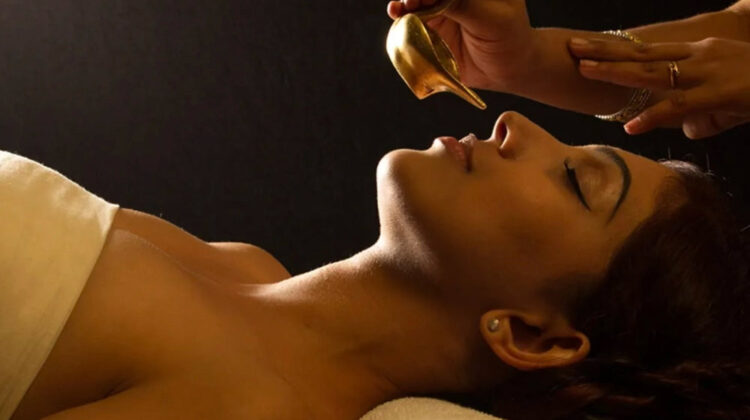
While lying down with the head gently tilted back, the therapist administers the selected oil or ghee into the nostrils. The amount and potency are individually adjusted according to one’s current condition, dosha, and type of imbalance.
4. Gargling
Warm water or a herbal decoction helps cleanse the throat and the channels activated during the treatment, further enhancing the effects of nasya.
5. Smoke inhalation (if needed)
If the therapist deems it appropriate, a dhoop stick made of turmeric and ghee may be used. The smoke is inhaled very briefly, once or twice, to encourage the release of any remaining mucus. This step is optional and applied carefully and selectively.
Duration and Effects of Nasya Therapy
A nasya treatment lasts about 30 minutes, and its effects are often immediate. Many people describe a sense of openness after just one session — as if the breath has more space and the mind more light.
In more severe cases of sinusitis, traditional Ayurvedic protocols may last around 14 consecutive days, always under the professional assessment of a therapist and with individual adaptation to the patient.
When Is Nasya Not Recommended?
Nasya is not performed during acute infections accompanied by high fever, immediately after meals, or in certain specific conditions without prior consultation. For this reason, it is essential that the treatment is always carried out under professional guidance and with an individualized approach.
Let Your Breath Become a Path Back to Clarity
When the nose begins to breathe freely again, the mind often grows quieter as well. Nasya is not only a therapy for the sinuses — it is an invitation to return to inner clarity, lightness, and peace.
Book a nasya treatment and experience its effects in practice.
If you are unsure of your dosha or would like to better understand what your body needs most right now, book an Ayurvedic consultation.