
Herbal Poultice Massage – Kizhi. Herbs, warmth and the wisdom of touch.
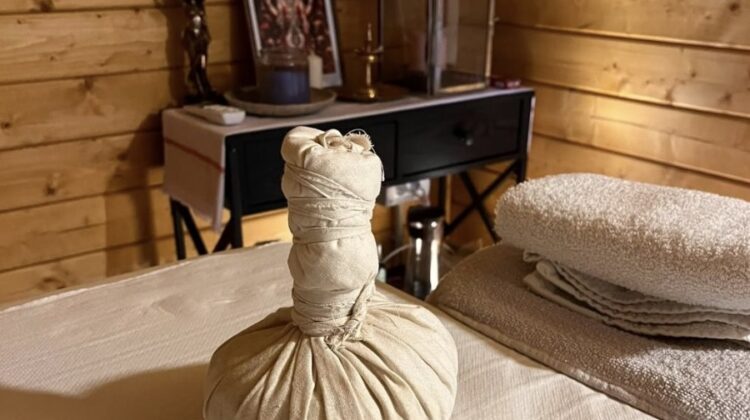
The first time you see an Kizhi treatment, you may wonder what is inside the small cloth bundles that Nandu warms, dips into hot oil and moves rhythmically over the body.
The answer seems simple – herbs.
But there is much more behind these little bundles.
Nandu gathers many of the herbs himself around Ponte Porton. Sage, lavender, bay leaves, lemon and other locally available plants become part of the treatment, bringing together the nature that surrounds us and your own individual nature.
And this is one of the things I find so beautiful about Kizhi, because it reflects something that is fundamental to Ayurveda: we don’t treat a symptom separately from the person experiencing it.
There is no single, ready-made herbal bundle that we use for everyone. The combination can change depending on whether we are working with stiffness, tension, painful muscles or joints, and on what we have assessed as being most suitable for that person.
What happens during an Kizhi massage?
The herbs are chopped and mixed, then briefly fried in warm Ayurvedic oil. While still warm, the herbal mixture is wrapped by hand into small cloth bundles.
Only then does the massage begin.
During the treatment, the bundles are repeatedly dipped into warm oil and Nandu uses them to rhythmically pat, press and massage specific areas of the body. The treatment can focus on a particular painful or stiff area – such as the lower back, shoulders or joints – or it can be used over the whole body.
The combination of warmth, oil, herbs and rhythmic pressure makes Kizhi feel very different from a conventional massage. And warmth is an essential part of the experience.
When do we use Kizhi?
In traditional Ayurvedic practice, Kizhi is used for painful and stiff joints, back pain and tension, muscle cramps, stiffness and reduced mobility.
The combination of heat and massage can help relax tense muscles and stiff tissues, encourage local circulation and create a greater sense of ease and mobility. Traditionally, Kizhi is also used for swollen and painful joints, including certain complaints associated with arthritis. In these cases, however, we always adapt the treatment to the individual and their health condition.
Kizhi at Ekānta
At Ekānta, you won’t find a “massage number 3” that looks exactly the same for everyone.
We start with the person in front of us.
We talk. We look at where the problem is and what is happening in the body. Nandu then chooses the herbs and decides how to approach the treatment according to what we have found.
What I particularly love is that there is no ready-made product from a box behind this treatment. Instead, there is someone who grew up with the Ayurvedic tradition of Kerala and who prepares the herbal bundles himself before using them in the treatment.
From gathering and preparing the herbs to the final touch, everything passes through his hands.
In a world where we have become used to almost everything arriving ready-made and being the same for everyone, this is exactly what makes this treatment so special to me.
It is prepared for the person who will be lying on our massage table that day.
What more can I say? Come and experience it for yourself.